
Mycelial musing #3: Empty Spaces between Ladders
Art practice needs a resilient eco system. The "fruits" can be as wide ranging as the mushroom kingdom.

My work is not directly about Fungus, nor is it made from it. I do not make Bioart, and I am not from a scientific background (I studied textile art, and later contemporary public art). I work with a variety of communities and groups including refugees and those with learning disabilities. I work in and occasionally build from scratch structures that accommodate diversity, precarity and most importantly, creativity as an open and recognised tool for growth. So for me, when we talk about fungus and Mycelium, metaphor comes in very useful. Mycelium as a system, a rhizomatic network, that sometimes bears fruits, which could be seen as artwork, or something else external, but its not always about that. What I always come back to is the process.
This was taken from a talk I made last week at the Museum of Natural Science & History in Lisbon, Portugal. I was invited by Daphne Frümann and Marco Fedele di Catrano to co-design an embodied walk-thru of Marco’s exhibition Empty spaces between ladders, that he chose to install in the corridors and in-between spaces, rather than the main exhibition rooms. Marco works in hybrid sculpture-installation-interventions that interact and respond to their surroundings, in this case a well lit museum corridor, using an abundance of salvaged doors from the streets of Lisbon. The work is ongoing and is designed to evolve over time, with the addition of new doors from other construction sites to be added to the montage.
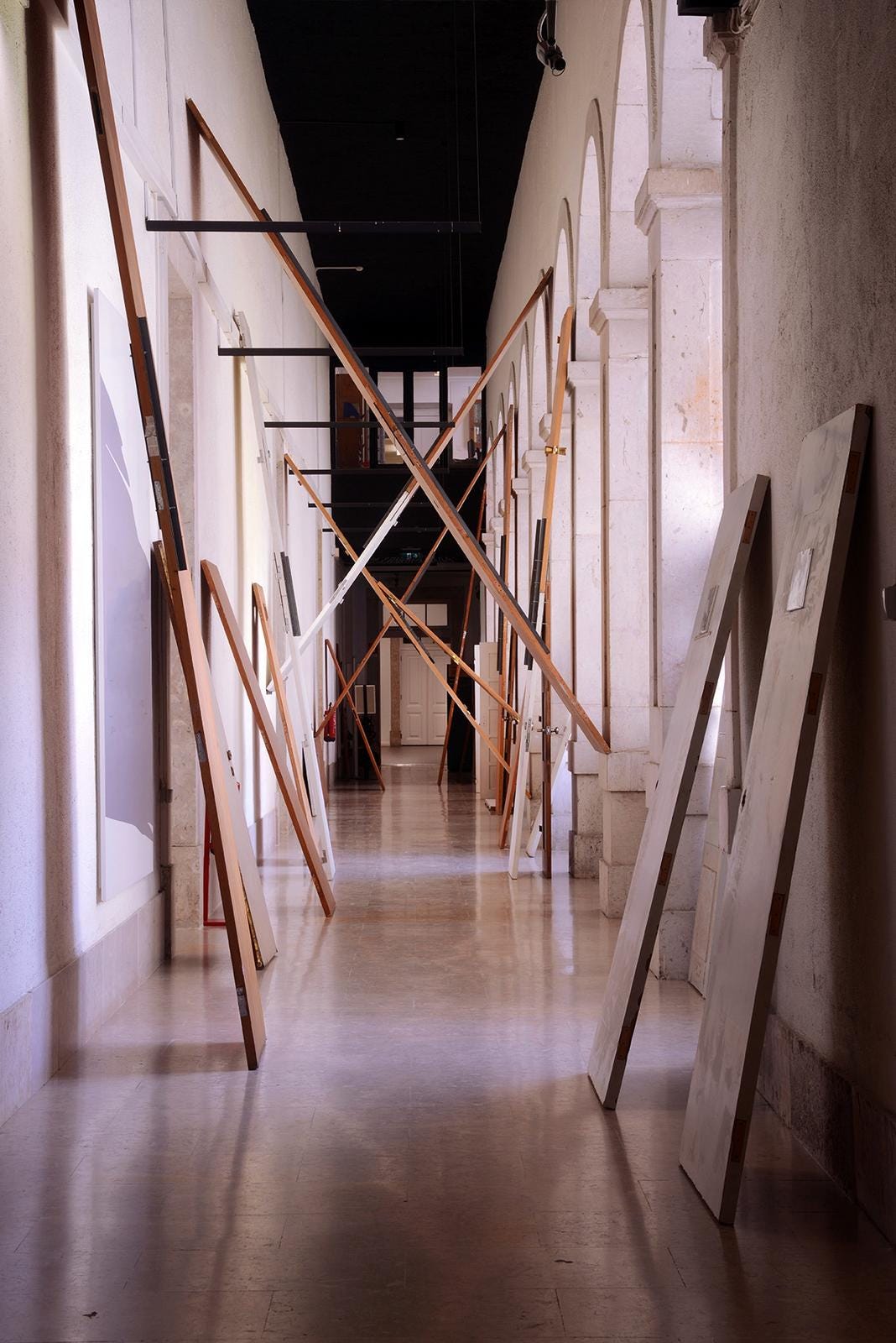
Following on from my previous musing (Escaping Catagorisation) the exhibition is appropriate, and I was delighted to be invited to infiltrate it with my own artistic lens. The rules of the museum stated that we couldn’t name the event a ‘talk’, so the notion of an ‘after-hours-embodied-walk’ felt sufficiently fungal. Although it is often believed that mushrooms are plants, they aren’t, in fact they are more closely related to us animals, but they are not these either. In the museum context, surrounded by a host of taxidermy specimens in glass boxes, it is refeshing to stumble on something else that sits between designated spaces.
Marco’s centrepiece, Rising Reversed, exhibited in the entrance, is a sculptural work made out of vinyl transparent foil stretched within a parallelepiped structure and filled with water, representing a state of continuous physical transformation through the waters weight re-modulating its shape. It transforms the entrance way of the museum, creating a vortex within a framework that incloses it and redirects the visitors into the centre of the space.
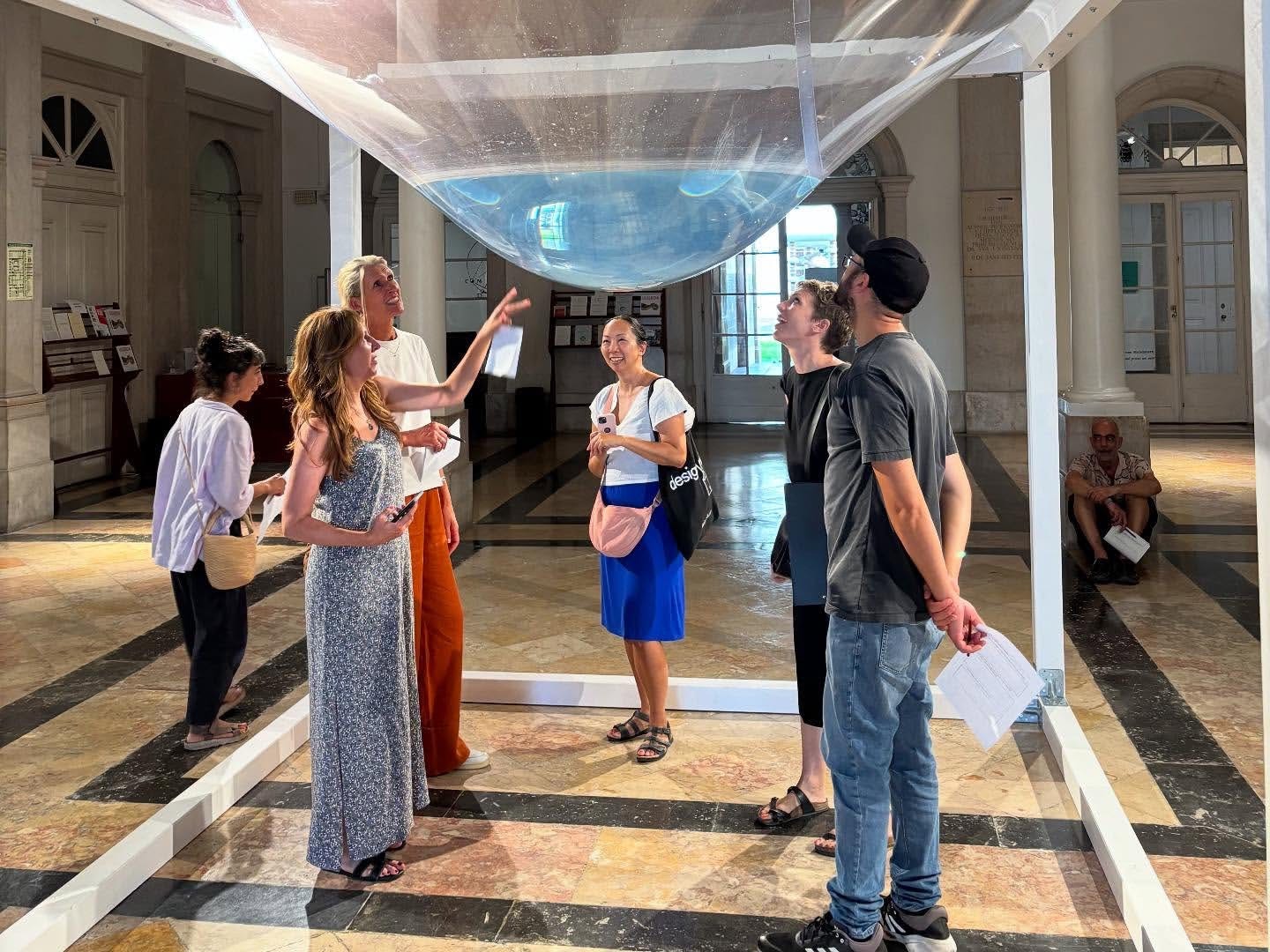
Rising Reversed refers to a fluid new self-re-modeled environment, both in its negative quality as endangered system, which could break down at any time, and in its dynamic vitality. Fungi show us how destruction (natural disasters, extinction, collapse) can lead us to new growth and adaptation. There is a quiet power in dormancy and timing. Marco approaches this transformation through his materials, creating a wondrous tension. There are even creatures already living inside the fluid!! Treating the museum as a living organism—with exhibits that shift, grow, or decompose over time, enables visitor participation—letting them leave spores of knowledge, memories, or questions that could grow into future exhibits. With the guided tour we also encouraged interaction through written exercises, these feedback loops mimicking living systems, as well as helping us get to know each other better. One person worked, seemingly abstractly, with methods of communication. Another curates grief - another mycellial teaching that I attempt to unpack from my own perspective in a previous musing how death can reframe life (and art)
Mycelium is an interesting framework that can also be utilised to embrace different working models, ones that challenge common perceptions of art making, or capitalism, or traditional institutions. I use the book Let’s Become Fungal, by Yasmine Ostendorf-Rodrigues, as a continuing reference, which she states is a “mutually beneficial system-design for humanity, seen through a mycological lens’. Yasmine sees a need for systematic change in response to the climate crisis.
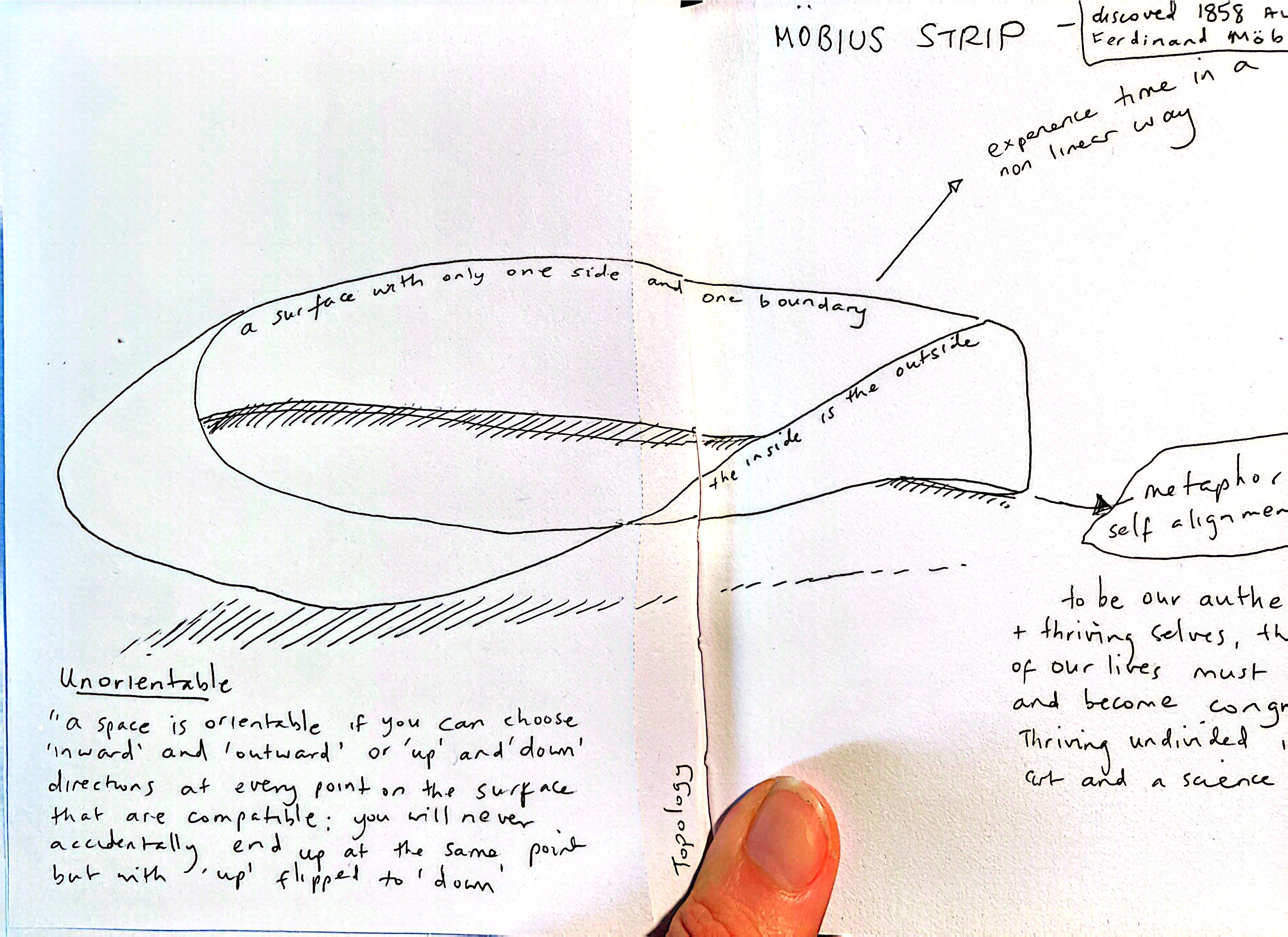
I am also wading through Timothy Mortons’ Dark Ecology, in the attempt to conceptualise a sort of Mobius strip* paper installation that will be exhibited in the aforementioned museum in 2027. The premise of his theory is that we are part of the problem that we are trying to solve, and its a wierd and strange loop. Morton claims that ‘‘the way in is the way out’’ - in other words, “you can’t step outside and resolve the system. You must stay in it and feel your way through”. The realisation of entanglement within the natural system suggests our need to embrace our ecological grief, which involves being with the strangeness until it becomes sweet, a place to rediscover who we are and how we love. He relates his own feelings with something global, adding a philosopher’s lens to the huge problems we face. “Feeling that your failing is just another word for creativity”. If ladders resemble productivity, outward success… then the empty spaces are the dark places, the unspeakable shadows of our inner being. Tim suggests that we climb down (the ladder) from the wrecked plane of anthropocentrism, to look around us and find the caring part of ourselves. If you find that place, think and act from that place. Emotion helps people to move. Emotions are from the future.
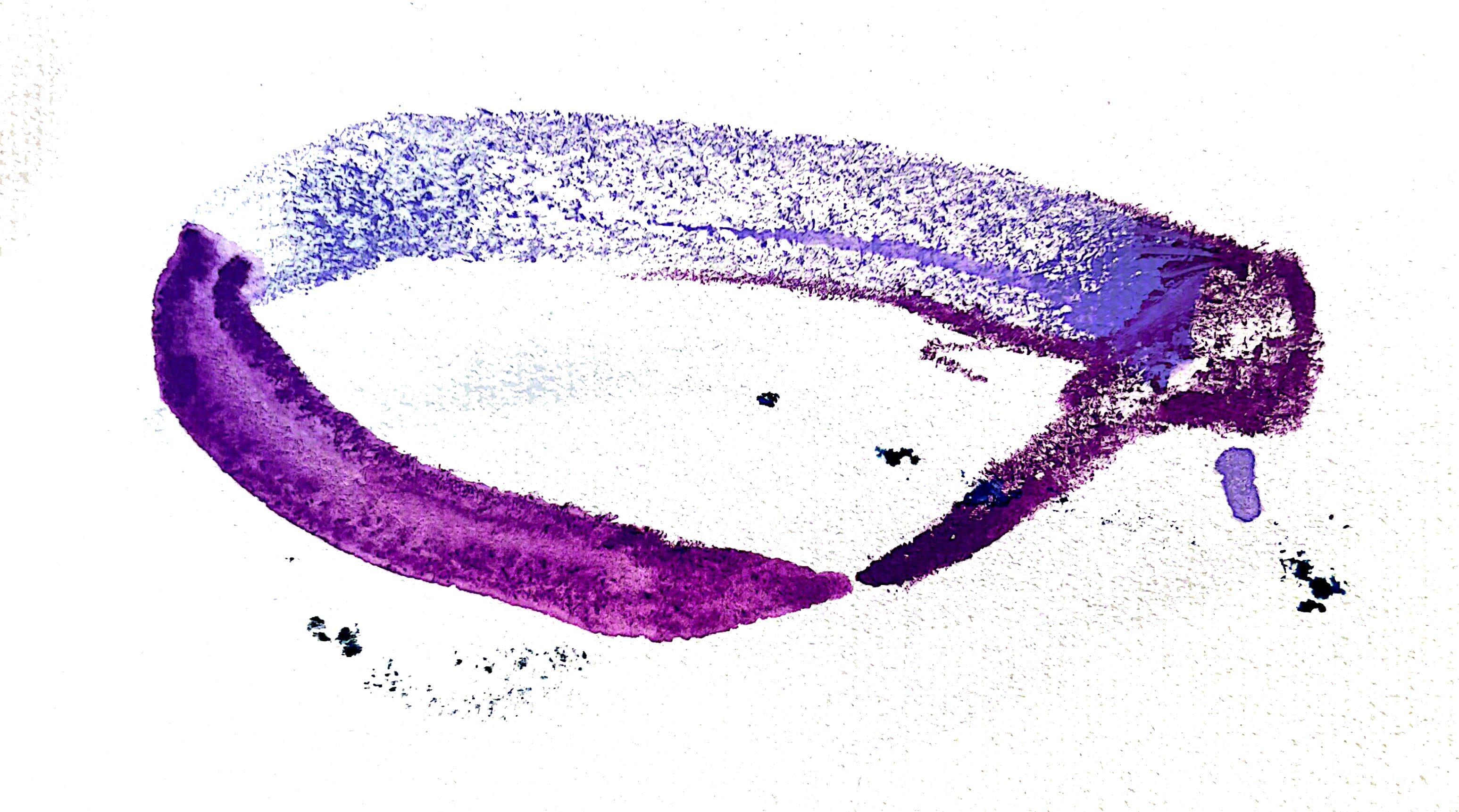
On that note, I’ll leave this with an empty space for a future musing. Here’s a Möbius strip, a surface with only one side and one boundary, so you get the idea.
If you want to follow my direct artists newsletter you will be informed on exhibition news and other events. You can visit Empty spaces between ladders at the Natural Science & History Museum, Rua da Escola Politécnica 56, Lisbon, until 14th September.
So sorry I missed this, NIna--this experience would have been right up my alley! Love your writing and what you are exploring. We have much to talk about when I return :)